

In the era of the booming new energy vehicle (NEV) industry, battery technology, as the core driving force, has garnered significant attention with every innovation. Cobalt-free batteries, an emerging technological direction in recent years, are currently caught in a dual game of environmental protection and cost considerations, profoundly influencing the development landscape of the entire industry.
I . Bakgrunden till ökningen av koboltfria batterier
(A) knapphet på koboltresurser och prisfluktuationer
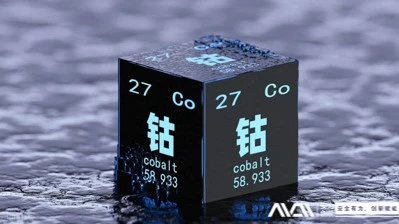
Cobalt is a crucial strategic resource with limited global reserves and uneven distribution. According to relevant data, nearly 70% of the global cobalt supply comes from the Democratic Republic of the Congo. Cobalt plays a vital role in the cathode materials of batteries, stabilizing the layered structure of the materials and enhancing their cycling and rate performance. However, it accounts for as much as 40% of the cost of cathode materials in ternary batteries. With the rapid growth in the number of NEVs, the demand for cobalt has surged, while the supply remains relatively limited, leading to high and volatile cobalt prices. In recent months, the international trading price of cobalt has approached 400,000 yuan per ton, reaching a Historisk topp . Denna prisvolatilitet har infört betydande kostnadstryck på batteritillverkare och NEV-företag, vilket uppmanat dem att söka alternativa lösningar, vilket ger upphov till koboltfria batterier .}
(B) Miljö- och sociala frågor
The mining process of cobalt is fraught with numerous environmental and social problems. Nearly two-thirds of the world's cobalt is mined in the Democratic Republic of the Congo, where it is often a by-product of large-scale nickel and copper mining operations. However, independent miners operate without any supervision, causing severe environmental damage and posing significant safety Risker . Koboltit innehåller arsenik, en klass 1 -cancerframkallande identifierad av den internationella byrån för forskning om cancer i världshälsoorganisationen, och dess sammansatta, arsenik trioxid, är den arsenik vi ofta hänvisar till i forntida tider . gruvarbetare i Demokratiska republiken i den congo basticalt miniskt, som inte hänvisar till en stor tid . gruvor i Demokratiska republiken i den coniskt minskade minskt, som i en massa skydd, som en stor tid . gruvrar i Demokratiska republiken i den congo basticalt miniskt, som vi hänvisar till i antika tider . gruvor i Demokratiska republiken i den congo basticalt miniskt, som vi hänvisar till i antika tider. Hälsa . Dessutom kan koboltbrytning också utlösa lokala sociala instabilitetsfaktorer, såsom resurskonkurrens och arbetskraftsfrågor . Därför har det blivit en oundviklig trend i branschens utveckling.}}}}}}}}}}}}
II . Tekniska principer och typer av koboltfria batterier
(A) Tekniska principer
Cobalt-free batteries do not mean they are completely free of cobalt. Instead, they reduce or eliminate cobalt elements in the cathode materials of batteries through technological means. Cobalt mainly stabilizes the layered structure of materials in batteries, preventing cathode corrosion and improving battery charging rates. To achieve cobalt-free status, researchers have adopted various technological approaches. For example, by doping specific elements with no unpaired electron spins, the phenomenon of electron superexchange is weakened, reducing lithium/nickel mixing and improving electrical performance. Doping elements with large MO bond energies slows down the volume change of crystals during the charge-discharge process, stabilizing the structure and improving cycle life and säkerhet .
(B) Huvudtyper
Litiumjärnfosfatbatterier (LFP): LFP batteries are inherently cobalt-free and offer advantages such as high safety and low cost. Tesla is in "in-depth negotiations" with CATL to use cobalt-free batteries in some of its products. If this negotiation is finalized, it means that LFP batteries will enter Tesla's production line. However, the relatively low energy density av LFP-batterier begränsar deras applikation i vissa avancerade passagerarfordonsegment i viss utsträckning .
Nickel-mansksystem koboltfria batterier: SVOLT's NMX cobalt-free battery is a type of nickel-manganese system cobalt-free battery. It increases the nickel proportion after removing cobalt and then dopes other elements to improve thermal stability. By coating substances, the working voltage is increased, thereby enhancing energy density. This type of battery can achieve an energy density motsvarande det för NCM811 samtidigt som materialet minskar med 5%-15%och på motsvarande sätt minskar battericellen BOM -kostnaden med cirka 5%, utan att påverkas av strategiska resurser .}
III . Kostnadsfördelar med koboltfria batterier
(A) Minskning av råvarukostnader
Cobalt is one of the most expensive elements in the cathode materials of ternary batteries. Reducing or eliminating the use of cobalt can significantly lower the raw material costs of batteries. According to a research report by Southwest Securities, the cost of low-cobalt or cobalt-free ternary batteries can be reduced by 30% after mass production. The cost of Litiumjärnfosfatkatodmaterial står för mindre än 15% av den totala batteriskostnaden . Data från Cinda Securities visar att den totala kostnaden per kWh NCM523 ternära batterier är 724 . 91 yuan, vilket är 18,4% högre än att LFP -batterier på 612.4.
(B) Främjande av minskning av batteripriser
Cost reductions will directly drive down battery prices and, in turn, lower the overall vehicle costs of NEVs. Taking Tesla as an example, battery costs account for 30%-40% of the total vehicle cost. If Tesla can achieve the application of cobalt-free batteries, it will be expected to further reduce battery costs, thereby creating room for price reductions in models such as the domestically produced Tesla -modell 3. Detta är av stor betydelse för att förbättra marknadens konkurrenskraft och främja deras popularisering .
IV . Miljöutmaningar som koboltfria batterier står inför
(A) Problem med prestandasstabilitet
Kobolt spelar en viktig roll för att stabilisera strukturen för batterimaterial . Efter att ha tagit bort kobolt kan prestandasstabiliteten för batterier påverkas . för närvarande, koboltfria batterier har fortfarande vissa prestationsproblem i termer av livslängd och laddningshastighet . för exempel, vissa experimentella batterier har fortfarande begränsade livslängd och långsamma {5. för exempel, vissa experimentella batterier har fortfarande begränsade livslängd och långsamma {5. för exempel, vissa experimentella batterier har fortfarande begränsade livslängd och långsamma {5. för exempel, vissa experimentella batterier har fortfarande begränsade livslängd och långsamma {5. för exempel, vissa experimentella batterier har fortfarande begränsade livslängd och långsamma {5 {5}) Dessutom, efter att ha tagit bort kobolt från högnickliga batterier, blir katodens termiska stabilitet värre, vilket gör dem mycket benägna att termiska runda . när de utsätts för höga temperaturer eller yttre effekter, är de mer benägna att utlösa explosioner och bränder .}
(B) Resurssubstitution och återvinningsfrågor
Även om koboltfria batterier minskar beroende av kobolt, kan de öka efterfrågan på andra resurser . till exempel, ökningen av nickelandelen i nickel-mangan-systemkoboltfria batterier kan leda till större leveranstryck på nickelresurser . samtidigt, med den breda tillämpningen av kobaltfria batterier, utgåvan av batterier, har det att ha blivit ökat av batterier. Prominent . Hur man effektivt återvinner och kasserar förbrukade koboltfria batterier för att undvika sekundär miljöföroreningar är en betydande utmaning som branschen står inför .
V . Utvecklingsutsikter och motåtgärder för koboltfria batterier
(A) Utvecklingsutsikter
Despite the numerous challenges, cobalt-free batteries still have broad development prospects in the long run. With continuous technological progress, the performance stability and safety of cobalt-free batteries are expected to be further improved, and costs will continue to decline. At the same time, as the global emphasis on environmental protection and sustainable development continues to increase, cobalt-free batteries, which align with this development trend, are expected Att bli en av mainstream -teknologierna för kraftbatterier i framtiden .
(B) motåtgärder
Stärka teknisk forskning och utveckling: Research institutions and enterprises should increase their investment in the research and development of cobalt-free battery technologies, continuously exploring new material systems and process technologies to improve the performance stability and safety of batteries. For example, by optimizing the types and proportions of doping elements, the thermal stability and cycle life of batteries can be improved.
Förbättra resurssäkerhetssystemet: Upprätta diversifierade resursförsörjningskanaler för att minska beroende av en enda resurs . Samtidigt, stärka undersökningen och utvecklingen av alternativa resurser som nickel för att förbättra resurssäkerhetsförmågan . Dessutom bör ansträngningar göras för att stärka återvinning och utnyttjande av tillbringade batterier och etablera en omfattande återvinning av resurserna}}}}}}}}}}}}} för att stärka återvinning av återvinning. {2})
Förbättra policyvägledning: The government should introduce relevant policies to encourage and support the research, development, and application of cobalt-free batteries. For example, providing research subsidies, tax incentives, and other policy supports to promote the development of the cobalt-free battery industry. At the same time, strengthening the regulation of strategic resources such as cobalt, standardizing market order, and ensuring the rational utilization of resurser .
Cobalt-free batteries, as an important development direction in NEV battery technology, are currently facing both challenges and opportunities in the dual game of environmental protection and cost considerations. Through measures such as strengthening technological research and development, improving the resource security system, and enhancing policy guidance, it is hoped that the sustainable development of cobalt-free batteries can be achieved, making greater contributions to the prosperity of the NEV industri .